The Demonstration Setup
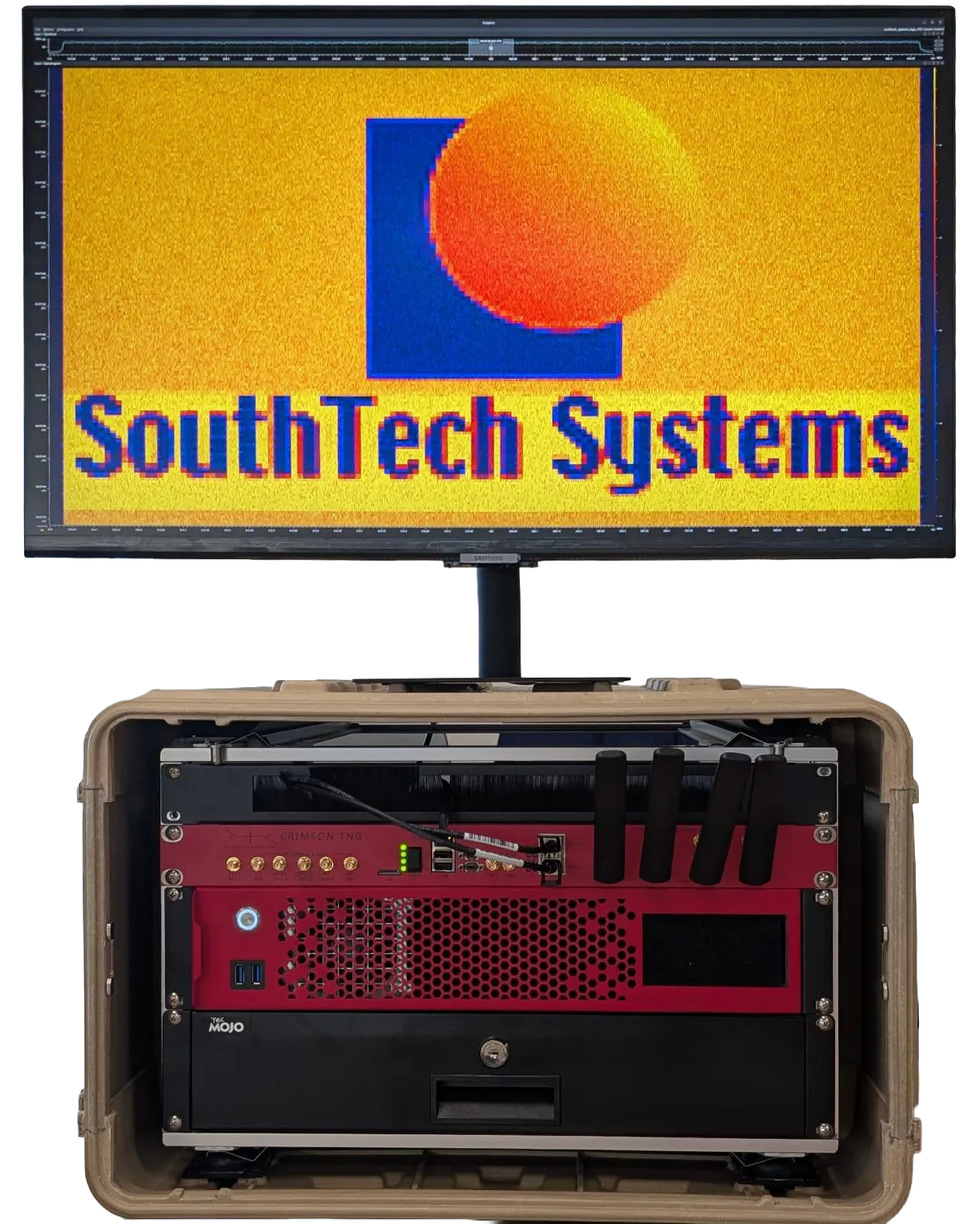
At the centre of the STS stand was a rugged case system built around the Per Vices Crimson TNG software defined radio, paired with a server running Sceptre from 3dB Labs. The setup was compact, self-contained, and fully deployable, covering everything needed to deliver a high-performance continuous spectrum monitoring capability in a form factor that can go wherever the mission requires.
 Click to enlarge
1.3 GHz of Continuous Spectrum Coverage
The headline capability of the demonstration was continuous, uninterrupted spectrum monitoring across 1.3 GHz of instantaneous bandwidth. For organisations working in EW, EMSO, and spectrum operations, that kind of coverage fundamentally changes what is operationally possible. Rather than scanning across a frequency range and accepting the gaps that come with it, continuous coverage across the full bandwidth ensures nothing is missed.
The cost-per-bandwidth argument here is compelling. Achieving equivalent coverage through traditional means requires significantly more hardware, more complexity, and more cost. The Crimson TNG and Sceptre combination delivers this in a single, integrated package at a fraction of the comparative investment.
AI-Enabled Analysis with OmniSIG
The demonstration also highlighted the AI-enabled signal analysis capability available through OmniSIG from DeepSig, referenced alongside the Sceptre platform. Applying AI to 1.3 GHz of continuous spectrum coverage turns a large volume of RF data into actionable intelligence, automating signal detection and classification at a scale that would be impractical for a human analyst working against a live wideband feed.
Why Form Factor Matters
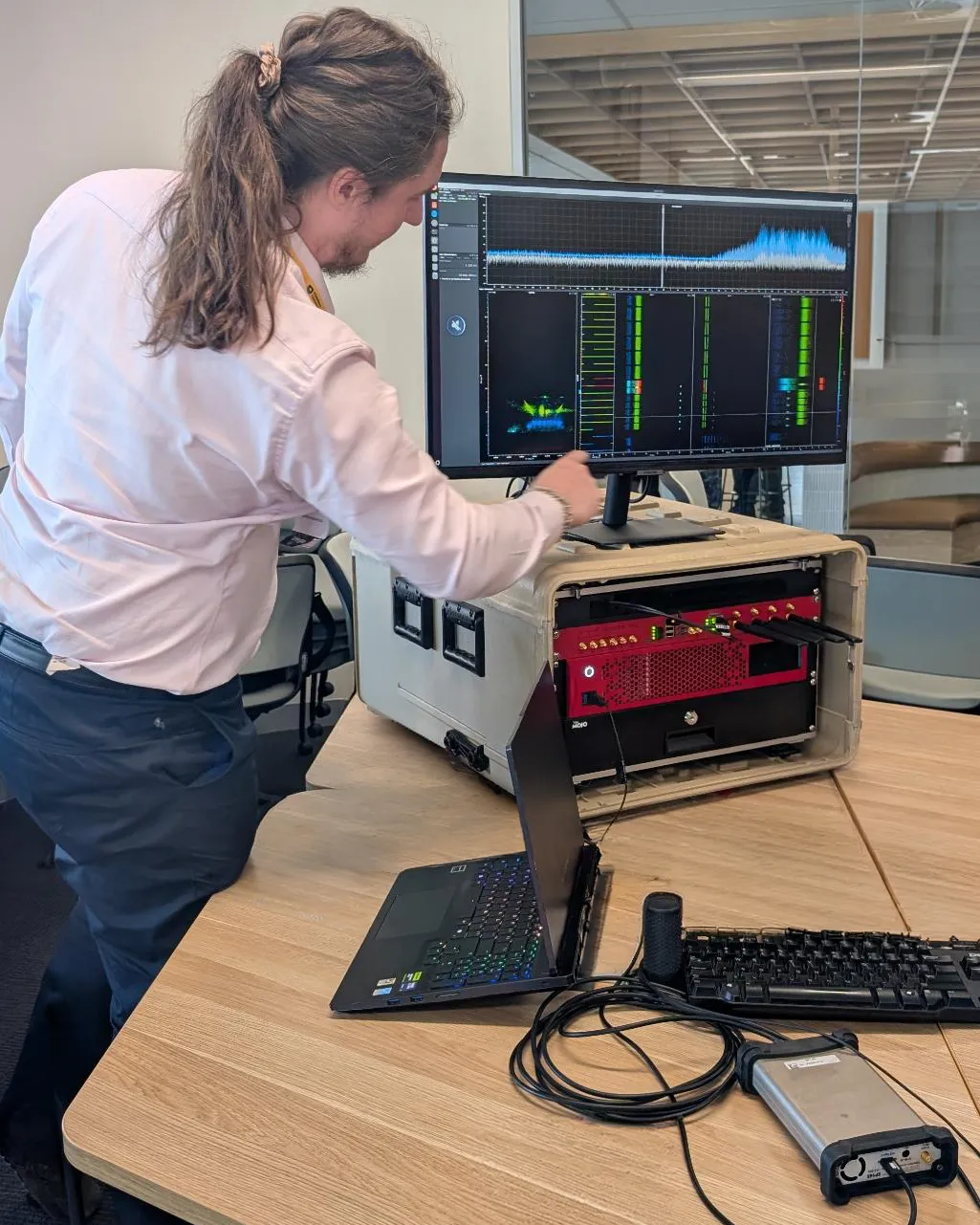
One of the strongest responses from attendees was to the physical setup itself. A server and Crimson TNG housed in a rugged case, operational and demonstrating live, it made the capability tangible in a way that a slide deck cannot. The system is portable, ruggedised, and straightforward to operate. For defence and government organisations weighing up deployable spectrum operations capability, ease of use and form factor are rarely secondary considerations.
 Click to enlarge
Amateur Radio Licensing
SDR Con provided an opportunity beyond the exhibition floor. Three members of the STS team sat and passed their amateur radio licence tests during the event, adding a formal qualification that complements the hands-on RF knowledge the team brings to its work every day. It is the kind of professional development that fits naturally into an event built around the SDR and radio community.
The Value of Smaller Events
SDR Con is a different kind of event to the larger defence and government forums STS attends across the year. The audience is technically deep, the conversations are direct, and there is less distance between the people asking questions and the people who built the technology. For a company like STS, that kind of environment is genuinely useful. The demonstration reached people who understood exactly what they were looking at, and the discussions that followed reflected that.
Smaller events also give teams the space to engage more broadly, learn, and in this case, walk away with new qualifications. That is not something that happens at every event.
If you missed us in Adelaide and want to see the demonstration or discuss how this capability could suit your requirement, contact us directly.